

PCI DSS Compliance & Security Advisory

The Payment Card Industry Data Security Standard (PCI DSS) is the global benchmark that sets security requirements for organisations handling credit card information. It mandates controls to protect cardholder data when it is accepted, processed, stored, or transmitted, significantly reducing the risk of breaches and fraud.

Organisations of all sizes involved in payment card transactions, ranging from retailers and e-commerce platforms to financial institutions and service providers, pursue PCI DSS certification or compliance to demonstrate their commitment to safeguarding sensitive payment data. Compliance is mandatory as required by major card brands, such as Visa and Mastercard, and it is often a contractual obligation with payment processors.

We bring senior, QSA-led expertise to guide organisations through the application of PCI DSS version 4.0 in a way that fits their operational realities. From initial scoping workshops to supporting Self-Assessment Questionnaires (SAQs) and through to managing complete Reports on Compliance (ROC) and Attestations of Compliance (AOC), we ensure compliance remains manageable, repeatable, and audit-ready.

Why Choose CipherShield for PCI DSS Compliance?

PCI QSA LogoAPAC-wide QSA Authority:

CipherShield is a PCI DSS Qualified Security Assessor Company (QSA-C) authorised by the PCI Security Standards Council to validate PCI DSS compliance across the Asia Pacific region. We provide independent, scheme-recognised assessments for merchants, service providers, acquiring and issuing banks, processors, gateways and PayFacs, with outcomes accepted by acquirers and card brands.

We are capable of managing multi-country CDEs, third-party oversight, and local regulatory nuances to ensure predictable audits and compliance. Evidence is gathered once, reused efficiently, and structured for first-time acceptance, helping reduce findings, shorten assessment cycles, and demonstrably lower cardholder data risk.

Explore Our PCI DSS Service Offerings

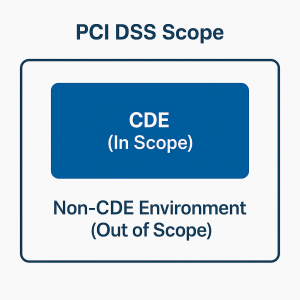
Our senior PCI specialists lead a QSA-grade workshop to discover cardholder data and sensitive authentication data, define a precise Cardholder Data Environment, and engineer scope reduction using tokenisation, encryption, and network segmentation. 

We validate data flows, third-party touchpoints, and cloud boundaries to prevent scope creep. You receive defensible diagrams and written rationale that stand up to assessor scrutiny.  The outcome is lower risk, lower cost, and a cleaner pathway to PCI DSS compliance for merchants, service providers, acquirers, and issuers

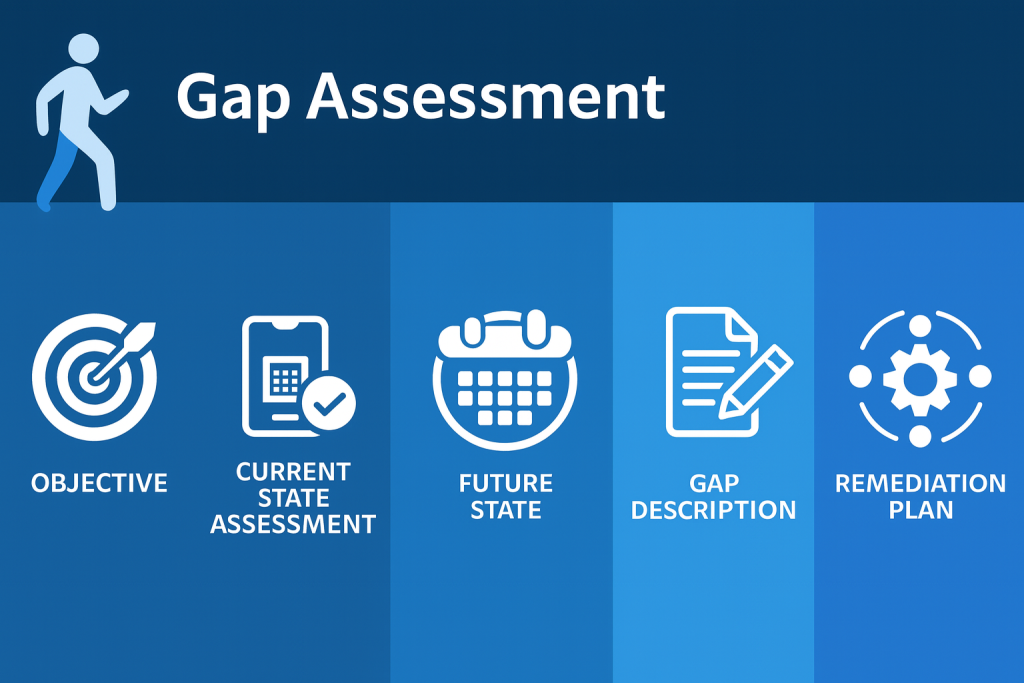
We assess each PCI DSS requirement by comparing it to your current environment, documenting evidence, expectations, control ownership, and implementation sequence. Our findings are prioritised based on measurable risk reduction and audit impact. For areas where PCI DSS v4.0.x allows tailored approaches, we perform Targeted Risk Analyses that justify the frequency and methods used.

You will receive a detailed, costed remediation roadmap, along with ready-to-use policy and procedure templates and control designs tailored to your platforms. This approach delivers clarity, expedites remediation, and reduces surprises during formal assessments.

Our QSA-led team expertly guides you through selecting and completing the appropriate Self-Assessment Questionnaire (SAQ) for less complex environments, or delivers a comprehensive Report on Compliance (ROC) and Attestation of Compliance (AOC) for more complex organisations. We perform detailed stakeholder interviews, sampling, and rigorous evidence quality checks to ensure your submissions are accurate, complete, and aligned with testing procedures. Evidence packs include configurations, logs, screenshots, and operational records mapped precisely to required controls.

When non-conformities or gaps are identified, we work closely with your teams to develop targeted remediation plans that prioritize risk reduction and audit readiness. Our support includes clear recommendations, costed roadmaps, and practical policy and control templates tailored to your environment. We help you track and resolve findings quickly to avoid delays and surprises during audits.

Throughout the process, we keep executives informed, coordinate timelines across business units, and ensure defensible and predictable outcomes. This comprehensive approach guarantees consistent compliance assurance across Australia and the wider APAC region, helping you confidently meet PCI DSS requirements.

CipherShield delivers PCI security testing services that validate the effectiveness of controls in live environments and support ongoing PCI DSS compliance.

Our services include ASV scanning, Internal Vulnerability Assessments (INVA), Internal Penetration Testing (INPT), External Network Penetration Testing (ENPT), Application Penetration Testing (APT), Segmentation Penetration Testing (SegPT), wireless scanning, and firewall ruleset reviews.

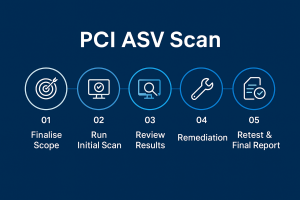
ASV scans support PCI DSS external vulnerability-scanning requirements, with vulnerabilities tracked through remediation and verified to closure. Authenticated internal vulnerability scans are performed at least quarterly and after significant changes to in-scope systems, applications, or network environments.

Our penetration testing services assess internal and external networks, cloud environments, web applications, APIs, and supporting infrastructure. Testing combines manual, exploitation-led techniques with automated assessment and secure code review, where required. Retesting confirms that remediation actions have resolved identified vulnerabilities.

Segmentation testing validates the isolation of the Cardholder Data Environment (CDE) from out-of-scope networks. We assess firewall paths, routing controls, access control lists, exposed services, and packet flows to confirm that segmentation controls remain effective.

Wireless security testing includes quarterly wireless discovery and rogue access-point detection. We assess WPA2/WPA3 configuration, encryption, key management, EAP controls, and the separation of POS, corporate, guest, and other wireless networks. Firewall ruleset reviews assess rule necessity, service exposure, documentation, change control, and the effectiveness of CDE boundary protections.

All reports align with PCI DSS v4.0.x testing procedures and CREST best practices. Deliverables include executive summaries, technical findings, prioritised remediation guidance, and retest evidence, helping reduce residual risk and support efficient assessor acceptance..

PCI DSS Managed Compliance

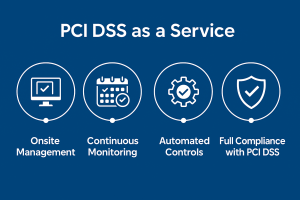
Strengthen and simplify your PCI DSS compliance programme with scalable, audit-ready managed services from CipherShield. Our dedicated onsite or embedded resources can support the implementation, operation, and continuous improvement of your PCI DSS controls, helping maintain compliance as your technology, payment environment, and business evolve.

We establish practical evidence calendars, control-monitoring routines, compliance runbooks, and risk registers to maintain year-round audit readiness. Targeted PCI DSS risk analyses help align control frequency, testing methods, and security decisions with your business objectives, while creating clear, defensible justification for compliance measures.

Our state-of-the-art GRC service management portal, RELENTES, provides end-to-end visibility of your PCI DSS programme. It centralises compliance activities, control ownership, evidence collection, findings, remediation actions, and certification readiness in one platform. RELENTES supports certification automation by streamlining evidence capture, workflow management, task allocation, approvals, and reporting.

Where possible, we integrate with your ticketing, logging, and security platforms to automate evidence collection and reduce manual compliance overhead. A structured issues register helps track findings through remediation, identify recurring control gaps, and drive continuous improvement.

By linking PCI DSS outcomes to payment assurance, operational resilience, and measurable risk reduction, CipherShield helps strengthen confidence among executives, boards, acquiring banks, assessors, and regulators.

The Benefits of PCI DSS Compliance

Enhanced Security

Implementing PCI DSS standards significantly strengthens your overall security posture. You are not just protecting card data; you are building a more secure business environment across the board.

Customer Trust

Visible commitment to PCI DSS signals that payment data is protected end-to-end. That assurance improves checkout confidence, reduces abandonment, and supports brand reputation in a breach-heavy market.

Reduced Risk

PCI DSS compliance dramatically reduces your risk of experiencing a costly data breach. Proactive prevention consistently costs less than incident response.

Avoid Penalties

Meeting PCI DSS requirements helps you avoid card-brand fines, chargeback exposure, and elevated interchange or processing fees. Compliance also protects your ability to accept cards—preserving revenue and partner relationships.
FAQS

Frequently Asked Questions About PCI DSS

PCI DSS (Payment Card Industry Data Security Standard) is essentially a set of rules designed to keep credit card information safe. If your business accepts, processes, stores, or transmits credit card data, you need to follow these standards—no exceptions.

Created by the Payment Card Industry Security Standards Council (PCI SSC), which includes major card brands like Visa, Mastercard, American Express, Discover, and JCB, PCI DSS exists for one apparent reason: to protect your customers' payment information and reduce credit card fraud.

Think of it as a comprehensive security checklist that ensures every organisation handling card data does so safely and responsibly.

Any organisation that accepts, processes, stores, or transmits credit card information must comply with PCI DSS. This includes retailers, restaurants, online businesses, service providers, and any other entity handling card payments—regardless of size or transaction volume.

PCI DSS is built around six core objectives:

  1. Build and maintain a secure network and systems
  2. Protect cardholder data wherever it's stored or transmitted
  3. Maintain a vulnerability management programme
  4. Implement strong access control measures (who can access what)
  5. Regularly monitor and test networks for security weaknesses
  6. Maintain an information security policy that everyone in your organisation follows

These might sound complex, but they are about implementing sensible security practices across your business.

It depends on how many card transactions you process annually. High-volume merchants (processing over 6 million transactions per year) typically need annual validation by a Qualified Security Assessor like CipherShield. Smaller merchants may validate compliance through self-assessment questionnaires, though validation frequency and requirements vary based on your acquirer (the bank that processes your card payments).

Our team can help you understand exactly what's required for your business.

Non-compliance carries serious consequences:

  • Financial penalties and fines from card brands (ranging from thousands to hundreds of thousands of dollars)
  • Increased transaction fees from your payment processor
  • Potential loss of your ability to accept card payments
  • Reputational damage that can affect customer trust and business relationships
  • Legal liability if a data breach occurs

If you experience a data breach whilst non-compliant, the consequences become even more severe—including potential lawsuits, regulatory action, and significant remediation costs.

The bottom line? Compliance protects both your customers and your business.

If you store, process, or transmit cardholder data (CHD) or sensitive authentication data (SAD), PCI DSS applies. Your route depends on merchant/service-provider level, transaction volume, and acquirer/scheme requirements.

Many can self-attest via a Self-Assessment Questionnaire (SAQ); larger or higher-risk environments require a QSA-led Report on Compliance (ROC) with an Attestation of Compliance (AOC).

We confirm your level, scope, and the correct path—then prepare evidence to match.

Timing depends on scope size, remediation complexity, resourcing, and third-party dependencies.

We accelerate timelines by reducing scope early, running parallel workstreams (policy, technical, evidence), and pre-validating artefacts against v4.0 testing procedures.

Expect stronger authentication requirements, explicit segmentation testing, targeted risk analyses (TRAs) for certain frequencies, clearer evidence expectations, and a choice between defined or customised approaches per control.

We design compliant options, write TRAs that withstand scrutiny, and map deliverables directly to v4.0 tests.

Accurate scoping starts with CHD/SAD discovery and data-flow mapping. We engineer scope reduction with tokenisation, encryption, network segmentation, and service boundaries, then document a lean, defensible Cardholder Data Environment (CDE).

Reduced Scope = fewer controls, lower cost, faster audits.

Outsourcing doesn’t outsource accountability. We document shared responsibility, review provider AOCs, set guardrails for build/config, and ensure logging, key management, and segmentation meet v4.0.

Quarterly ASV external scans, authenticated internal vulnerability scanning, penetration testing at least annually and after significant change, segmentation testing to prove CDE isolation, and wireless/rogue AP discovery with hardening verification.

Our reports include retest evidence and direct v4.0 control mappings for fast assessor acceptance.

For vendors (Req 12.8), we implement risk tiering, contractual clauses, evidence cadence, and exception tracking.

Right-size scope, standardise builds, automate evidence capture, and reuse artefacts across audits. Align PCI with ISO 27001/Essential Eight work, implement BAU runbooks and metrics, and schedule rolling reviews to avoid year-end spikes.

We design programmes that cut findings, shorten audit cycles, and measurably lower payment risk.

Ready to Get Started?

Get in touch with with us to protect cardholder data, maintain compliance, and build enduring trust with your customers.