


 APAC-wide QSA Authority:
CipherShield is a PCI DSS Qualified Security Assessor Company (QSA-C) authorised by the PCI Security Standards Council to validate PCI DSS compliance across the Asia Pacific region. We provide independent, scheme-recognised assessments for merchants, service providers, acquiring and issuing banks, processors, gateways and PayFacs, with outcomes accepted by acquirers and card brands.
We are capable of managing multi-country CDEs, third-party oversight, and local regulatory nuances to ensure predictable audits and compliance. Evidence is gathered once, reused efficiently, and structured for first-time acceptance, helping reduce findings, shorten assessment cycles, and demonstrably lower cardholder data risk.
PCI DSS Scoping & Scope Reduction
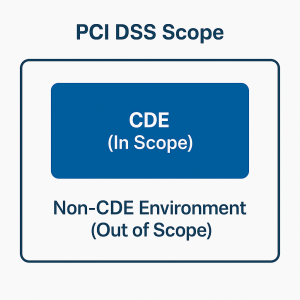 Our senior PCI specialists lead a QSA-grade workshop to discover cardholder data and sensitive authentication data, define a precise Cardholder Data Environment, and engineer scope reduction using tokenisation, encryption, and network segmentation.
We validate data flows, third-party touchpoints, and cloud boundaries to prevent scope creep. You receive defensible diagrams and written rationale that stand up to assessor scrutiny. The outcome is lower risk, lower cost, and a cleaner pathway to PCI DSS compliance for merchants, service providers, acquirers, and issuers
Our senior PCI specialists lead a QSA-grade workshop to discover cardholder data and sensitive authentication data, define a precise Cardholder Data Environment, and engineer scope reduction using tokenisation, encryption, and network segmentation.
We validate data flows, third-party touchpoints, and cloud boundaries to prevent scope creep. You receive defensible diagrams and written rationale that stand up to assessor scrutiny. The outcome is lower risk, lower cost, and a cleaner pathway to PCI DSS compliance for merchants, service providers, acquirers, and issuers PCI DSS Gap Assessment & Remediation Plan
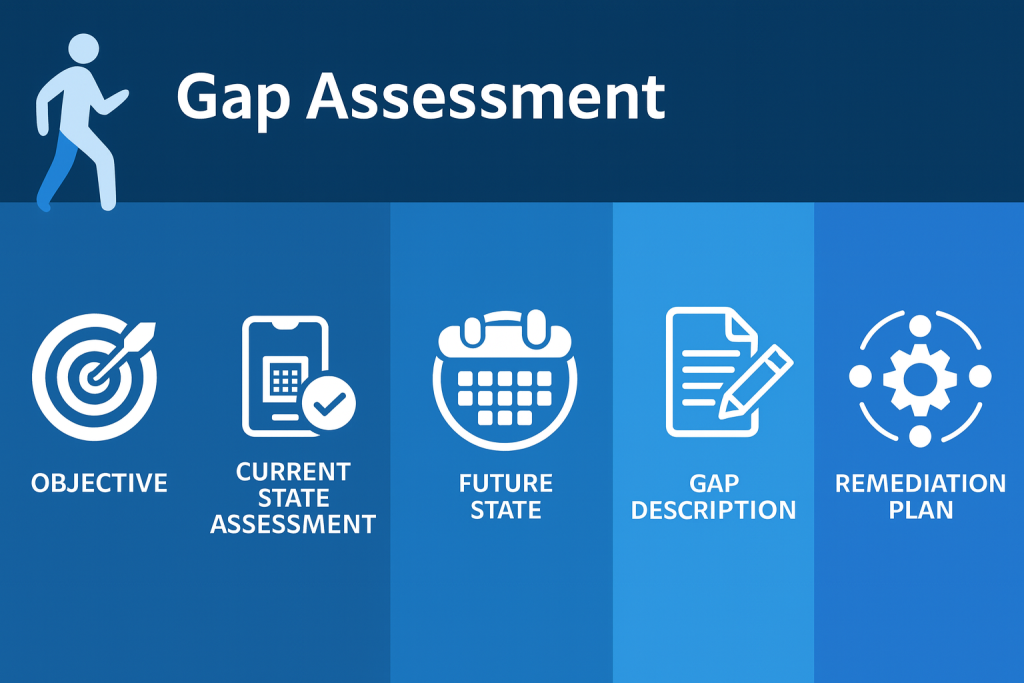 We assess each PCI DSS requirement by comparing it to your current environment, documenting evidence, expectations, control ownership, and implementation sequence. Our findings are prioritised based on measurable risk reduction and audit impact. For areas where PCI DSS v4.0.x allows tailored approaches, we perform Targeted Risk Analyses that justify the frequency and methods used.
You will receive a detailed, costed remediation roadmap, along with ready-to-use policy and procedure templates and control designs tailored to your platforms. This approach delivers clarity, expedites remediation, and reduces surprises during formal assessments.
PCI DSS Validation & Reporting : SAQ, ROC & AOC
Our QSA-led team expertly guides you through selecting and completing the appropriate Self-Assessment Questionnaire (SAQ) for less complex environments, or delivers a comprehensive Report on Compliance (ROC) and Attestation of Compliance (AOC) for more complex organisations. We perform detailed stakeholder interviews, sampling, and rigorous evidence quality checks to ensure your submissions are accurate, complete, and aligned with testing procedures. Evidence packs include configurations, logs, screenshots, and operational records mapped precisely to required controls.
When non-conformities or gaps are identified, we work closely with your teams to develop targeted remediation plans that prioritize risk reduction and audit readiness. Our support includes clear recommendations, costed roadmaps, and practical policy and control templates tailored to your environment. We help you track and resolve findings quickly to avoid delays and surprises during audits.
Throughout the process, we keep executives informed, coordinate timelines across business units, and ensure defensible and predictable outcomes. This comprehensive approach guarantees consistent compliance assurance across Australia and the wider APAC region, helping you confidently meet PCI DSS requirements.
PCI Security Testing Services : ASV, Penetration, Segmentation & Wireless
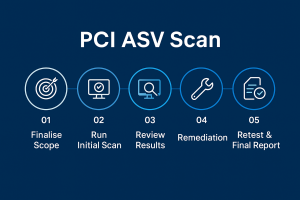 We deliver PCI security testing that validates the effectiveness of your controls in a live environment. External vulnerability scans are conducted by an Approved Scanning Vendor (ASV), with remediation tracked through to resolution. Internally, we perform authenticated vulnerability scans quarterly and after any significant changes.
Our penetration testing is exploitation-driven, covering networks, cloud environments, and web applications through manual and automated testing or secure code reviews, aligned with PCI requirements. Retesting is performed to confirm issue resolution. Segmentation testing verifies the Cardholder Data Environment (CDE) isolation through detailed packet and routing analysis.
Wireless testing includes quarterly discovery of wireless and rogue access points, configuration hardening using WPA2/3, key management, and EAP protocols, alongside verification that POS, corporate, and guest Wi-Fi networks remain properly segmented.
All our reports are aligned with PCI DSS v4.0.x testing procedures and CREST best practices, including executive summaries, technical remediation guidance, and evidence of retesting - all designed to reduce residual risk and facilitate smooth assessor acceptance.
PCI DSS as a Service (PCIDSSaaS)
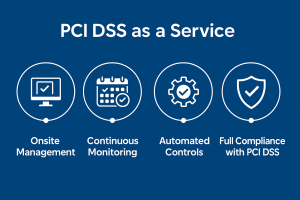 Enhance your PCI DSS compliance with streamlined and scalable operations. At CipherShield, we can provide dedicated onsite resources to oversee the implementation and ongoing management of your PCI DSS program. This approach ensures consistent compliance as your technology and business evolve.
We establish comprehensive evidence calendars, conduct robust control monitoring, and develop detailed runbooks to keep your operations audit-ready throughout the year. Our targeted Risk Analyses align control frequency and strategies with your business objectives, providing a clear justification for compliance measures. By linking PCI outcomes to payment assurance and risk mitigation, we help bolster your board's and regulators' confidence.
To maximise efficiency, we automate evidence capture whenever possible, seamlessly integrating with your ticketing and logging systems. Additionally, we maintain a well-organised issues register to help prevent recurring challenges, ensuring that your compliance efforts are as effective as they are proactive.